I hadn't been back to Millbrook in fifteen years when my mother called to tell me she'd fallen and broken her hip. The drive from Chicago felt longer than it used to, maybe because I kept dreading what I'd find when I got there. Small towns have a way of either staying exactly the same or dying completely, and I wasn't sure which would be worse.
The first thing I noticed pulling into town was that they'd put in a new Subway where Morrison's Hardware used to be. Then I saw the Dairy Queen was boarded up, which hit harder than I expected. But when I turned onto Elm Street to head toward my mother's house, I had to pull over and just sit there for a minute.
He was still there.
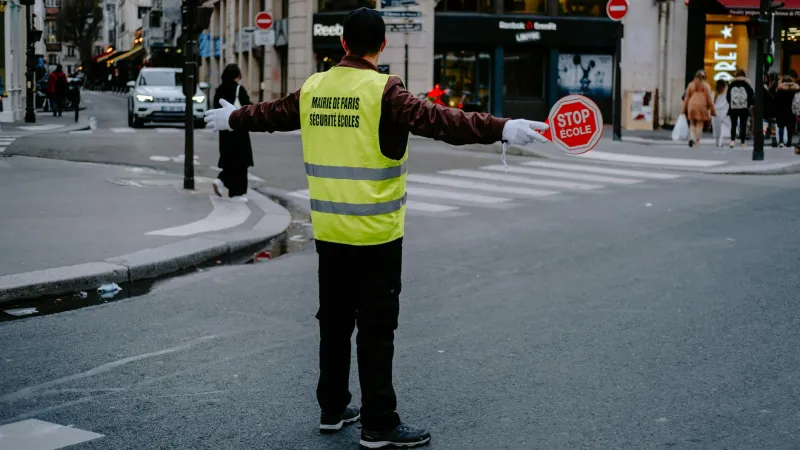
The crossing guard at the intersection of Elm and Fifth, right in front of where Lincoln Elementary used to be. Same orange safety vest, same red stop sign on a stick, same measured way of stepping into the crosswalk with his palm held up to traffic. I watched him guide a group of kids across the street — kids who couldn't have been more than seven or eight — and I felt something cold settle in my stomach.
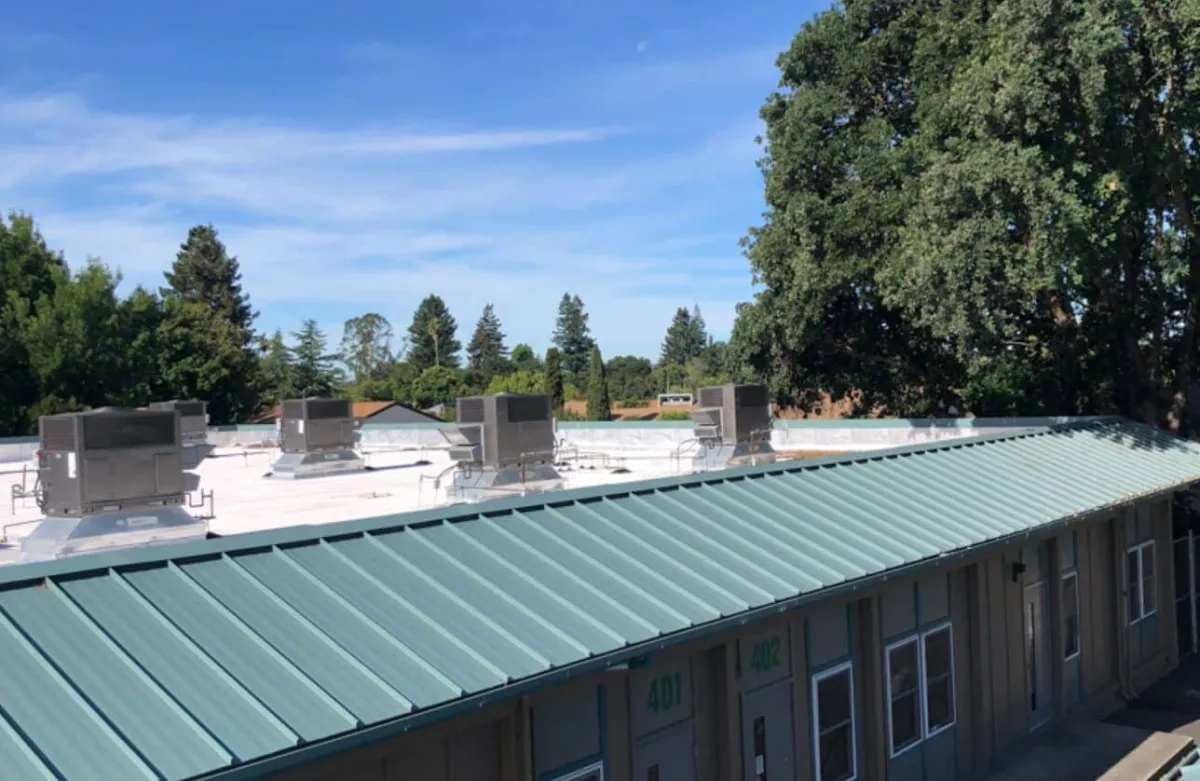 Photo: Lincoln Elementary, via beamprof.com
I remembered this man. Mr. Patterson, we called him, though I don't think anyone ever told us his name. He'd been my crossing guard in second grade, which would have been 1997. I remembered his weathered hands, the way he'd nod at each kid as they passed, how he never smiled but somehow made you feel safe anyway.
But that was twenty-six years ago.
The man I was watching through my windshield looked exactly the same. Not older, not grayer, not more stooped. Exactly the same. Same brown hair under the orange cap, same careful movements, same everything.
I drove to my mother's house in a daze.
"Mom," I said after we'd gotten through the pleasantries and I'd helped her settle back into her recliner. "Do you remember the crossing guard from when I was at Lincoln Elementary?"
She looked up from her tea. "Mr. Patterson? Of course. Sweet man. Very dedicated."
"Is he... is he still working there?"
"Oh yes, been there forever. Why?"
I chose my words carefully. "He looked exactly the same as I remembered. Hasn't he retired?"
My mother laughed, but it sounded forced. "You know how it is with some people. Good genes, I suppose."
That night, I couldn't sleep. I kept thinking about the crossing guard's face, how it hadn't changed at all. I'd expected the soft distortion of childhood memory, where adults seem larger and more imposing than they really are. But this wasn't that. This was like looking at a photograph that had somehow stepped into real life.
The next morning, I drove back to the intersection. School was starting, and there he was again, shepherding children across the street with the same patient precision. I parked and watched for twenty minutes. He never took a break, never checked his phone, never even seemed to blink more than necessary. And when a car ran the stop sign — just rolled right through while he was in the crosswalk — he didn't react at all. Didn't jump back, didn't shout, didn't even look surprised. He just kept walking as if the car wasn't there.
The car didn't hit him. I'm not sure how, but it didn't.
I went to the library after that. Millbrook's library still kept the old newspaper archives on microfilm, and I spent the afternoon scrolling through decades of the Millbrook Gazette. I found what I was looking for in a 1963 edition: a small article about the school district hiring crossing guards for the first time.
The photograph showed three men in new orange vests, standing in front of Lincoln Elementary. The caption read: "New crossing guards Robert Patterson, James Henley, and David Morse begin their duties this week."
The man on the left was unmistakable. Same face, same build, same careful posture. But that wasn't what made my hands shake as I printed the page.
It was the way he was looking at the camera. Not at the photographer, but directly at the lens, as if he could see through sixty years of time to meet my eyes. As if he'd been waiting.
I called my mother that evening.
"Mom, you said you remembered Mr. Patterson from when I was little. But didn't you go to Lincoln Elementary too?"
A long pause. "Yes, dear. Class of '68."
"Was he your crossing guard?"
Another pause, longer this time. "Yes. He was."
I wanted to ask more, but something in her voice stopped me. Instead, I drove back to Chicago the next day, telling myself I was imagining things.
But I've been thinking about that photograph. About the way he looked at the camera in 1963, like he knew exactly who would come looking for him someday. And I keep wondering: if Lincoln Elementary was demolished in 2003, why does he still show up every morning at 7:45 AM to guide children across the street?
And whose children is he protecting?