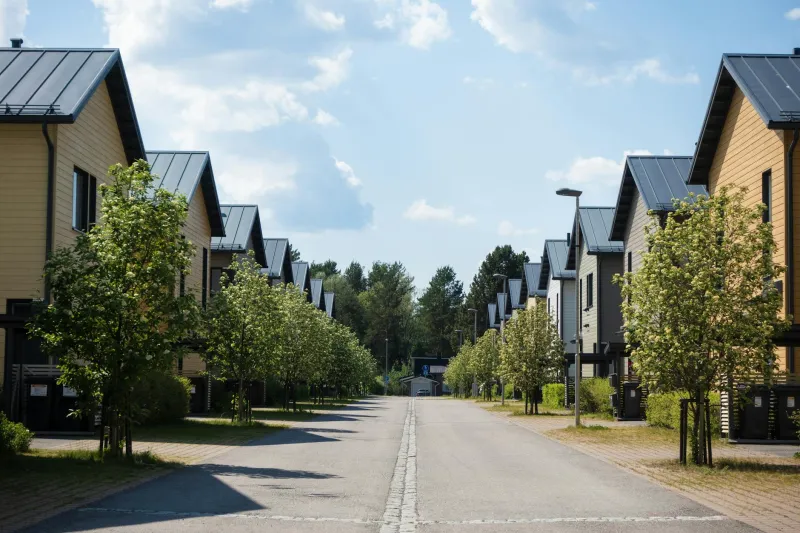
I've always been the type to document things. Not in an obsessive way—just someone who likes taking pictures at neighborhood gatherings, keeping a record of the little moments that make up suburban life. My wife Sarah used to tease me about it, calling me the "unofficial historian of Maple Street." I guess that's why I was the only one who noticed.
 Photo: Maple Street, via images.squarespace-cdn.com
David moved into the Hendersons' old place last April. Nice enough guy, maybe mid-thirties, worked remotely for some tech company. He introduced himself at our mailboxes on a Tuesday morning, firm handshake, easy smile. Said he was looking forward to being part of the community. The kind of neighbor you're grateful to have.
 Photo: David, via cdn.britannica.com
The first time I photographed him was at the Kowalskis' Memorial Day barbecue. Nothing unusual about the day—kids running through sprinklers, adults clustered around the grill with beers, the usual suburban theater we all perform without thinking. I was capturing the scene when David walked into frame, chatting with Tom from two houses down about lawn care.
 Photo: Kowalskis' Memorial Day barbecue, via www.stollerfamilyestate.com
I didn't notice anything wrong until I was going through the photos that evening. David was there, clear as day, but something felt off about the image. It took me embarrassingly long to realize what it was. The concrete beneath his feet showed no shadow. Not a faint shadow, not a shadow pointing the wrong direction—no shadow at all.
I convinced myself it was a trick of the light. Late afternoon sun can do strange things, create optical illusions. But the photo showed Tom's shadow stretching normally across the same patch of concrete, along with the shadows of the fence posts, the picnic table, even the beer bottle in David's hand casting its tiny dark line across his palm.
Everything had a shadow except David himself.
I started paying more attention after that. Not stalking—just the natural awareness you develop for your immediate neighbors. David maintained his yard meticulously, always waved when he saw me checking the mail, helped Mrs. Chen carry groceries when her arthritis was acting up. Model neighbor behavior.
But I couldn't stop looking at the ground around him.
The Petersons threw their daughter Emma a birthday party in June. Backyard full of seven-year-olds, parents standing around making small talk while keeping half an eye on the chaos. I brought my camera, as usual. David showed up with a perfectly wrapped gift and that same easy smile.
I took maybe thirty photos that afternoon. In every single one where David appeared, the pattern held. Bright summer sun, sharp shadows from everyone and everything—the birthday girl blowing out candles, parents leaning against the deck railing, even the balloons tied to fence posts. But David stood among them like he existed in a different kind of light.
That night, I spread the photos across my kitchen table and went through them methodically. In one shot, David was standing next to Carl Morrison, both men roughly the same height and build. Carl's shadow stretched clearly across the grass. The space beside it, where David's shadow should have been, showed only uninterrupted lawn.
I started taking pictures whenever I saw him outside. Not obviously—just casual shots of the neighborhood that happened to include him. Washing his car in the driveway. Checking his mailbox. Talking to the mailman on a Tuesday afternoon. The collection grew, and the pattern never broke.
Sarah found the photos last week. She'd been looking for pictures from Emma's party to share with her sister when she stumbled across my informal David documentation. Her reaction wasn't what I expected.
"These are really good," she said, flipping through them. "David always photographs so well. Very photogenic."
I pointed out what I'd been seeing. Showed her the side-by-side comparisons, the impossible absence of shadows. She looked at the photos for a long time, really studying them.
"I don't see what you're talking about," she finally said. "They look normal to me."
I pulled up the barbecue photo on my laptop, zoomed in on the concrete where David had been standing. "Look," I said. "Right here. No shadow."
Sarah squinted at the screen, then looked at me with the kind of gentle concern usually reserved for elderly relatives having senior moments.
"Honey," she said softly, "David's shadow is right there. Clear as day."
I looked at the screen. David's shadow stretched normally across the concrete, perfectly proportional, exactly where it should be.
I've been going through all the photos again. Every single one now shows David with a completely normal shadow. The images I was certain documented something impossible now appear utterly mundane. But I remember what I saw. I remember the careful way I checked and double-checked.
David waved at me from his driveway this morning. Same friendly gesture, same easy smile. I waved back automatically, then looked down at the asphalt around his feet.
His shadow was there, sharp and dark in the morning sun.
But I swear it wasn't there before.