I Found My Neighbor's Obituary From Four Years Before She Died
The Habit That Started It All
I was the kind of kid who collected everything. Baseball cards, bottle caps, interesting rocks — and for some reason I can't fully explain, newspaper clippings. Not the important stuff, just random articles that caught my eye. Comics, weird news stories, and sometimes obituaries of people with unusual names.
Mrs. Patterson lived three houses down from us on Elm Street, and she had the most interesting garden in the neighborhood. Tomatoes that grew bigger than softballs, roses that bloomed until the first snow. I used to walk past her house on my way to school just to see what was growing.
 Photo: Elm Street, via parkers-images.bauersecure.com
She was maybe sixty then, always wearing gardening gloves and a wide-brimmed hat, always waving when she saw me looking over her fence. A nice lady who minded her own business and grew things that shouldn't have thrived in our harsh Indiana winters.
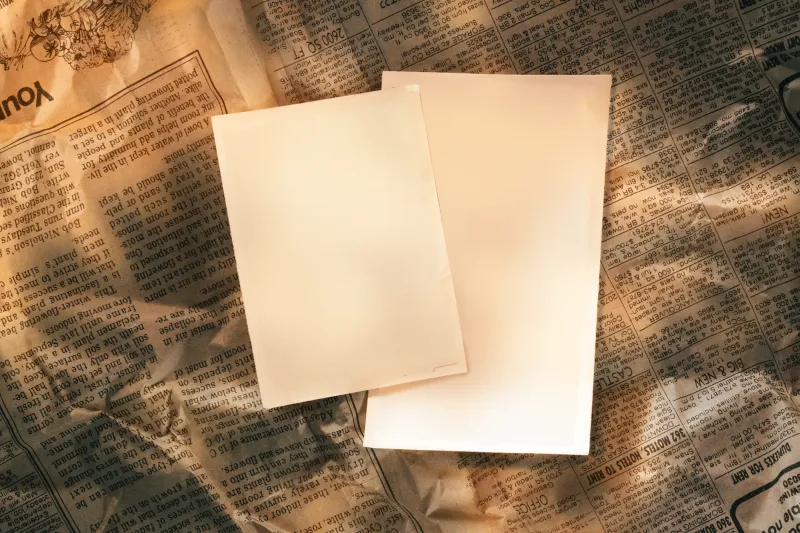
I found the obituary in a stack of old newspapers my dad was about to throw away. Patterson, Eleanor M., age 64. Survived by her sister in Oregon and her garden club. I don't remember why I cut it out — maybe because I recognized the name, maybe because it seemed sad that someone so alive could be reduced to three column inches.
I pressed it between the pages of my science textbook and forgot about it.
Thirty Years of Normal Life
I moved away for college, got married, divorced, moved again. Elm Street became a childhood memory, and Mrs. Patterson became just another face from a past I rarely thought about. My parents sold the house when I was twenty-eight, and I helped them pack, throwing away boxes of my old school things without looking too closely at what was inside.
But I kept some books. Sentimental value, I told myself, though most of them sat unread on my apartment shelves for years.
Last month, I got a call from my old neighbor, Jim Hendricks. We'd stayed in touch through Christmas cards, the way people do when they want to maintain the illusion of friendship without the effort. He was calling to let me know that Mrs. Patterson had passed away.
"Peaceful," he said. "In her garden, if you can believe it. Found her sitting on her little bench by the roses, like she just decided to take a rest."
I said the appropriate things, expressed the appropriate sadness. But something nagged at me, some half-remembered detail I couldn't quite grasp.
The Discovery
I was looking through my old books that evening, probably triggered by the nostalgia of hearing about Mrs. Patterson, when the yellowed newspaper clipping fell out of my tenth-grade science textbook.
Patterson, Eleanor M., age 64.
I stared at it for a long time, trying to make sense of the date at the top of the page. May 15, 2019. But Mrs. Patterson had just died in 2023. I called Jim back to double-check — maybe I'd misunderstood, maybe she'd died years ago and he was just telling me now.
"No," he said, sounding confused. "Just last week. May 20th. The funeral's tomorrow."
May 20th, 2023. Four years and five days after the obituary I'd clipped as a child said she'd died.
The Details That Shouldn't Have Existed
I drove back to Indiana for the funeral, the clipping in my jacket pocket like a guilty secret. The service was small, held at the same Methodist church mentioned in the newspaper obituary. Mrs. Patterson's sister came from Oregon, just like the clipping said she would.
At the reception, I found myself talking to members of her garden club — a group that, according to my thirty-year-old piece of newspaper, she'd been "active in until the end." They told me about her prize-winning tomatoes, her roses that bloomed impossibly late in the season.
They told me about the bench where she was found, the same bench mentioned in an obituary that had been printed when she was still sixty years old.
"She always said she wanted to die in her garden," one of the ladies told me. "Said she'd made peace with the idea years ago."
I wanted to ask when she'd said that, wanted to know if it was before or after 2019, but the words stuck in my throat.
The Archives Don't Lie
I spent the rest of the weekend at the local library, scrolling through microfilm of the Herald-Tribune from May 2019. There it was, on page 6 of the May 15th edition. The same obituary, word for word, that I'd carried in my textbook for three decades.
The librarian, a woman about my age who'd probably gone to school with me, helped me print a copy. "Strange," she said, looking at the date. "Eleanor Patterson just died last week. Maybe they ran an old obituary by mistake?"
But the details were too specific, too accurate. The garden club membership. The sister in Oregon. Even the age was right — Mrs. Patterson had turned 68 just two months before she died.
Someone had written her obituary when she was sixty-four and still had four years left to live.
Questions I'm Afraid to Ask
I've been back home for two weeks now, and I can't stop thinking about that clipping. I've checked the Herald-Tribune's online archives, called the newspaper directly, even tracked down the reporter whose byline was on the obituary. He retired in 2020 and doesn't remember writing it.
"Could've been a template," he told me over the phone. "Sometimes we'd write them in advance for prominent community members, update them when the time came."
But Mrs. Patterson wasn't prominent. She was just a nice lady who grew exceptional tomatoes and minded her own business. And the obituary wasn't a template — it was too specific, too personal.
Last night, I went through the rest of my old textbooks, page by page. I found three more obituaries, all clipped from newspapers in the late 1990s. People I didn't recognize, names that meant nothing to me.
I haven't looked them up yet.
The Thing About Knowing
There's a comfort in not knowing some things, in letting mysteries stay mysterious. I could research those other names, find out if they died when their obituaries said they would. I could dig deeper into how newspapers work, into who has access to their systems and why someone might print death notices for people who were still very much alive.
But Mrs. Patterson died exactly where her obituary said she would, surrounded by exactly the people it said would mourn her. She died at the age it predicted, in the season it described.
And sometimes, when I'm lying awake at 3 AM thinking about newspaper clippings and garden benches, I wonder if she knew. If she read her own obituary in 2019 and spent the next four years living toward that moment, making sure every detail would align.
I wonder if she was relieved when it finally happened.
I wonder if I really want to know who wrote it, or why they knew so much about a future that hadn't happened yet.
The other three obituaries are still sitting on my kitchen table, face down. Tomorrow, maybe, I'll work up the courage to turn them over and see what else someone knew before they should have.