I've listened to it 847 times now. I know because my phone keeps track of these things, and I'm the kind of person who notices details like that. The kind of person who checks timestamps and cross-references medical records and asks too many questions at funerals.
Mom's last voicemail came in at 3:47 PM on a Tuesday. The coroner said she died at 3:43 PM. Four minutes. Cardiac arrest, sudden and final, alone in her kitchen while making tea. The kettle was still whistling when Mrs. Chen found her six hours later.
But the voicemail is fourteen minutes and thirty-seven seconds long.
"Hey sweetheart," it starts, same as always. Mom's voice, tired but warm. "Just wanted to check in. I know you're busy with work, but I was thinking about you today." Normal stuff. The kind of rambling message she'd leave when she was lonely, which was most days since Dad passed.
She talks about the weather—unseasonably warm for October. About needing to pick up more of those crackers I like from the store. About how Mrs. Chen's dog got loose again and she helped catch it. Mundane things. Comforting things. For the first four minutes, it's just Mom being Mom.
Then she says something that makes my blood freeze every single time.
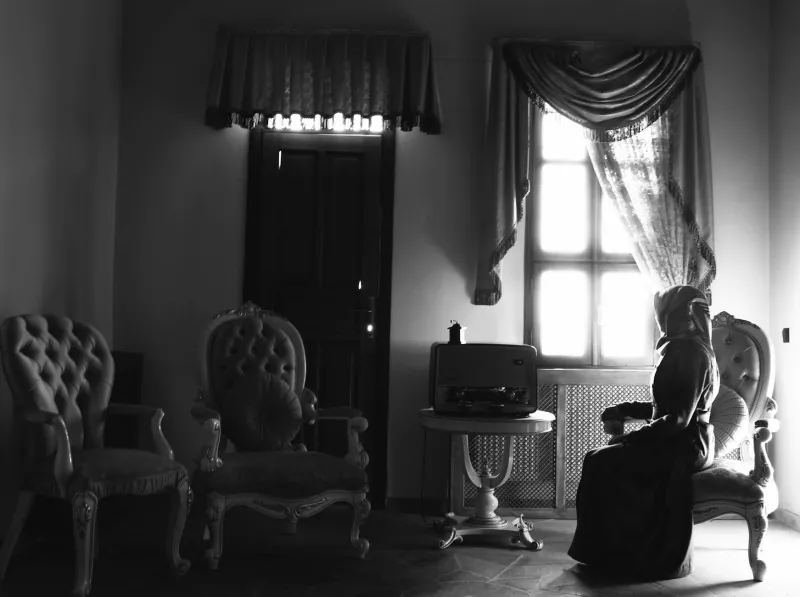
"Oh, and honey? You're sitting in that blue chair again. The one by the window. You've been there for twenty minutes now, just staring at your phone."
I am sitting in the blue chair. I've been sitting here for twenty-three minutes, actually, but who's counting?
The first time I heard that part, I figured it was coincidence. Grief makes you paranoid. Makes you read meaning into random words. But Mom keeps talking, and her voice stays calm and loving, like she's reading me a bedtime story.
"You haven't eaten today. There's leftover pasta in the fridge, the kind with the mushrooms you pretend not to like but always finish anyway. You should eat something, sweetheart. You're getting too thin."
I look down at myself. She's right. I am getting thin. Haven't had much appetite since the funeral three weeks ago. The pasta is in the fridge. I can see the container from here, white Tupperware with the blue lid that never quite fits right.
"Your father's watch is on the coffee table. You've been wearing it every day since I died, but you took it off an hour ago because the ticking was driving you crazy. It's sitting next to that book you're pretending to read. The one about grief that your sister bought you."
The watch sits exactly where she says it is. Next to "The Five Stages of Grief," bookmarked on page twelve because I can't concentrate long enough to read more than a paragraph at a time.
Mom's voice continues, describing my apartment with perfect accuracy. The pile of unopened mail on the kitchen counter. The coffee mug I've been using for three days without washing. The way I've been sleeping on the couch because the bedroom feels too empty.
"I worry about you," she says, and I can hear her smile in the words. "You've always been my sensitive boy. Even as a baby, you felt everything so deeply. It's not a weakness, honey. It's what makes you kind."
Tears blur my vision, but I don't stop the recording. I never stop the recording.
"There's something else," Mom continues, and her tone shifts slightly. Still warm, still loving, but with an edge I can't quite identify. "Something I need to tell you about the chair you're sitting in. About why I bought it."
This is new. I've listened to this message 847 times, and this part is new.
"Your great-grandmother used to sit in a chair just like that one. After your great-grandfather died, she'd sit by her window every evening, talking to him. The neighbors thought she was losing her mind, but she wasn't crazy, sweetheart. She was just... keeping the connection open."
The recording crackles slightly, like old phone lines do sometimes.
"The thing about love is that it doesn't just stop when someone dies. It has to go somewhere. It has to find a way to keep flowing, like water finding the lowest point. And sometimes, if you love someone enough, if you worry about them enough, you find ways to check in. To make sure they're okay."
My hands are shaking now.
"I can't stay long. This kind of thing takes a lot out of a person, even when they're already gone. But I needed you to know that you're not alone. I needed you to know that I'm still here, in whatever way I can be."
The background noise changes. Instead of the quiet hum of her kitchen, I hear something else. Something that sounds suspiciously like the traffic outside my apartment window. The same traffic I'm hearing right now.
"Eat the pasta, sweetheart. Read the book. Call your sister back—she's been worried sick. And maybe... maybe don't listen to this message so many times. It's not healthy to hold onto things so tightly."
A pause. Then, softer:
"I love you. I'll always love you. But you need to let me go now."
The message ends.
I sit in the blue chair for a long time after, watching the timestamp: 14:37. Impossible. But then again, so is love that survives death. So is a mother's worry that transcends the boundaries between worlds.
I delete the message.
Three days later, I get another one.