I still have the voicemail saved on my phone. Sometimes I play it when I can't sleep, though I probably shouldn't. The timestamp reads 11:47 PM on March 15th. The coroner's report shows David was pronounced dead at 11:36 PM that same night.
Eleven minutes. That's how long my husband was supposedly alive after he died.
The accident happened on Route 9, about twenty miles outside Millfield. David's Honda hit a patch of black ice, spun out, and wrapped around an oak tree that had been standing there for probably a hundred years. The paramedics said he died on impact. No hospital transport. No emergency room. Just the wreckage of twisted metal and a man who would never come home.
But at 11:47, my phone buzzed with a voicemail from his number.
"Hey Sarah, it's me." His voice sounds tired but calm, the way it always did after a long day at the office. "I'm at the hospital now. Room 314. The walls are this awful mint green color, and there's a whiteboard with 'David Chen' written in blue marker. Someone named Dr. Martinez, I think."
I remember sitting in our kitchen, staring at the phone. The state trooper had left twenty minutes earlier after delivering the news. I was still wearing the pajamas I'd put on hours before, still clutching the cup of tea that had gone cold in my hands.
"The curtains are beige with these little blue flowers," David continued. "Reminds me of your grandmother's wallpaper, remember? The window faces east, I think. I can see the parking lot and that weird sculpture they have out front. Looks like a metal tree or something."
I'd never been to Millfield General Hospital. David and I lived forty minutes away in Riverside. We had our own doctors, our own emergency room. There was no reason for either of us to know what Room 314 looked like, or what sculpture sat in their parking lot.
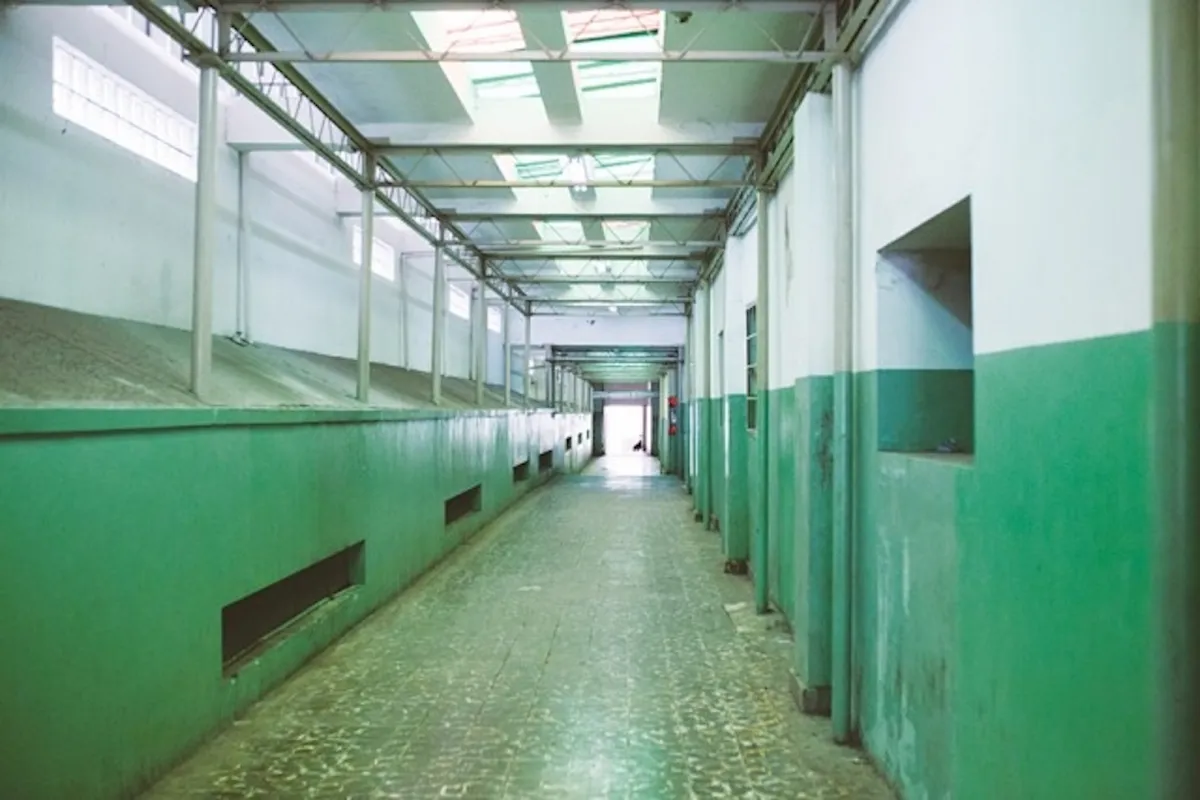 Photo: Millfield General Hospital, via media.lenouvelliste.com
"There's this sound," he said, and I could hear it in the background—a rhythmic squeaking, like wheels that needed oil. "Sounds like a cart going down the hallway. They keep pushing it back and forth. Kind of annoying, actually."
The voicemail lasted three minutes and forty-seven seconds. David talked about the IV in his left arm, about how the bed was positioned near the window, about a nurse with red hair who kept checking on him. He sounded so normal, so alive. He even complained about the hospital food, though he said he wasn't really hungry.
"I should be home tomorrow," he said near the end. "Maybe the day after. Depends on what the tests show. Love you, Sarah. Don't worry about me, okay?"
The line went quiet, but the call didn't end. For another thirty seconds, I could hear that squeaking cart in the background, getting closer and then farther away. Finally, the voicemail cut off.
I called the hospital the next morning. I don't know what I expected them to tell me. That it was all a mistake? That David was actually alive, recovering in Room 314?
The receptionist confirmed that Room 314 existed. Mint green walls, beige curtains with blue flowers. The window did face east, overlooking the main parking lot where a metal sculpture—an abstract representation of a tree—had stood for twelve years. Dr. Martinez worked the night shift in the emergency department. The nurse with red hair was probably Linda, who'd been there for fifteen years.
But David Chen had never been a patient at Millfield General. His body went straight from Route 9 to the county morgue.
"The only David Chen we've had was about six months ago," the receptionist said. "Elderly gentleman. Heart attack. He didn't make it."
I hung up and played the voicemail again. That squeaking sound in the background—I'd started to notice it followed a pattern. Twenty-three seconds of silence, then the squeak getting closer. Twelve seconds of the loudest squeaking, then it faded away. Another twenty-three seconds of silence, then it started again.
I timed it obsessively for weeks. The pattern never changed.
Last month, I finally drove to Millfield General. I told them I was considering a job there, asked for a tour. The volunteer who showed me around was chatty, eager to point out all the hospital's features. When we passed Room 314, I asked to see inside.
Empty bed. Mint green walls. Beige curtains with tiny blue flowers. The window faced east, just like David had said. And in the hallway, I could hear it—that rhythmic squeaking. A medication cart with a bad wheel, pushed by a nurse who made the same rounds every day.
Twenty-three seconds of quiet. Twelve seconds of squeaking. Twenty-three seconds of quiet.
I asked about the cart. The volunteer laughed. "Oh, that old thing. We keep meaning to fix the wheel, but somehow it never happens. Been squeaking like that for years."
"How many years?"
She thought about it. "At least since I started volunteering here. That was... oh, about eight years ago now."
David died six months ago. The voicemail is still on my phone. Sometimes I wonder if Room 314 is waiting for him, if somewhere in that mint green space with the beige curtains, he's still lying in that bed by the window, listening to the cart squeak by in the hallway, wondering when he'll be well enough to come home.