The Corner Table Everyone Remembers But No One Can Explain
Coming Home to Demolition
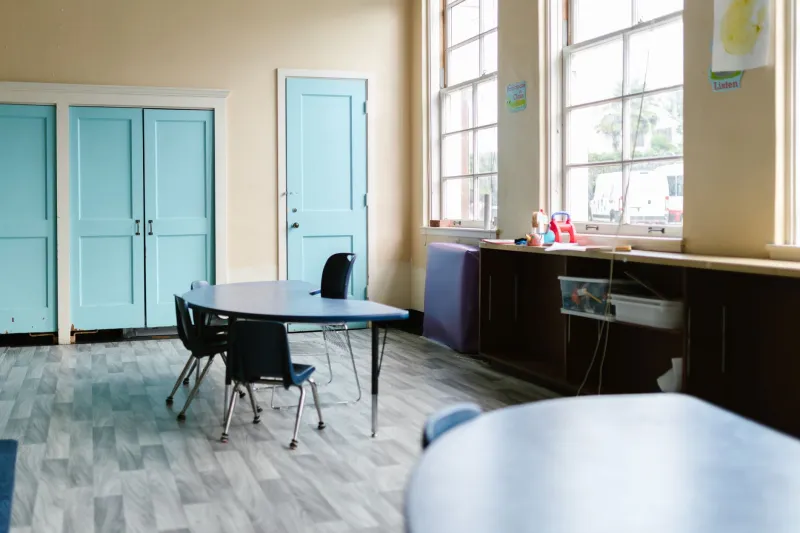
The letter arrived on a Tuesday in March, printed on official school district letterhead. Riverside Elementary was being torn down after forty-three years of service, and they were hosting a final open house for alumni and community members. "Come see your old classrooms one last time before the wrecking ball arrives."
I hadn't been inside that building since 1997, but something about the invitation tugged at me. Maybe it was nostalgia, or maybe it was the way they'd phrased it — "one last time" — like a warning instead of an invitation.
The parking lot was fuller than I'd expected for a Saturday afternoon. Families wandered the hallways with phones out, taking pictures of bulletin boards and drinking fountains that looked exactly the same as they had twenty-five years ago. The smell was right too — that specific combination of industrial floor cleaner and childhood anxiety that every elementary school seems to share.
I found myself gravitating toward the cafeteria, drawn by muscle memory and the ghost of a thousand peanut butter sandwiches.
The Table That Time Forgot
The cafeteria looked smaller than I remembered, the way childhood places always do. Same long tables with attached benches, same serving line with its sneeze guards and heat lamps. But something was off about the far corner, the spot where the back wall met the side windows.
One table sat there, separated from the others by maybe six feet of empty space. The surface was scarred and worn smooth in places, like driftwood polished by decades of ocean waves. The attached benches sagged slightly, their metal supports showing rust that the other tables didn't have.
It looked ancient. Not just old — ancient, like it had been there since before the school was built, like the cafeteria had been constructed around it.
I walked over for a closer look, running my fingers along the surface. The Formica top was etched with initials and words I couldn't quite make out, worn down to faint impressions that might have been names or might have been random scratches. One section of the table was stained dark, a permanent shadow that no amount of industrial cleaning had been able to remove.
"Weird, right?"
I turned to find a woman about my age standing nearby, arms crossed, staring at the same table. She looked familiar in that vague way that former classmates do — features you recognize but can't quite place.
"Sarah Chen," she said, extending a hand. "Mrs. Morrison's third grade class."
 Photo: Sarah Chen, via static.actu.fr
I remembered then. Sarah had sat two rows behind me, the girl who always finished her math worksheets first and helped other kids with their reading.
"That table," she continued, nodding toward the corner. "I've been staring at it for ten minutes, and I can't figure out why it bothers me so much."
The Memory That Wasn't There
We stood there together, two adults trying to solve a puzzle we couldn't quite articulate. Other families moved around us, pointing out where they used to sit, remembering favorite lunch ladies and the day someone spilled chocolate milk all over the floor.
But nobody else seemed to notice the corner table.
"It was always full," Sarah said suddenly. "I remember that much. Every lunch period, that table was packed. Loud, too. I used to get annoyed because I couldn't concentrate on my homework."
She was right. The memory surfaced slowly, like something rising from deep water. That corner had been the rowdy section, the place where the noise came from. Not the mean kids or the troublemakers — just loud. Always loud.
"Who sat there?" I asked.
Sarah frowned, and I watched her face cycle through the same confusion I was feeling. "I... I don't know. I can remember the noise, but I can't picture any faces."
Neither could I. The memory was like looking at a photograph that had been deliberately blurred — you could make out shapes and movement, but the details had been scrubbed away.
Asking Around
We started approaching other visitors, people we recognized from our elementary school years. Did they remember the corner table? Did they remember who sat there?
The responses were unsettling in their consistency.
"Oh, that table," said Mike Torres, who'd been in my fifth-grade class. "Yeah, it was always full. Bunch of kids I didn't really know."
"Kids from other grades, maybe?" suggested Jennifer Walsh, though she didn't sound convinced. "I remember walking past it to throw away my lunch tray, and it was always packed. But I can't... I mean, I should remember some of them, right?"
Even Mrs. Patterson, the lunch lady who'd worked there for thirty years before retiring, seemed confused when we asked her about it.
 Photo: Mrs. Patterson, via www.bloglive.it
"That corner was always the busy spot," she said, wiping her hands on a dish towel that wasn't there anymore. "Had to tell those kids to keep it down almost every day. But you know, I can't picture any of their faces. Isn't that strange? You'd think after thirty years, I'd remember the troublemakers."
The Evidence That Shouldn't Exist
Sarah had brought her phone and was taking pictures of everything, documenting the school before it disappeared forever. When she showed me the photos later, I noticed something in the corner table shots that we'd missed in person.
In the reflection on the cafeteria windows, you could see the outlines of figures sitting at the table. Not clear enough to make out features, just shadows that suggested children hunched over lunch trays. But the cafeteria had been empty when we took the pictures.
"Probably just smudges on the glass," Sarah said, but she didn't sound convinced.
We went back to look at the table one more time before leaving. That's when I noticed the seating chart.
It was tucked behind a bulletin board near the serving line, probably forgotten by whoever had been tasked with cleaning out the school. A laminated grid showing table assignments from the 1995-96 school year — my fourth-grade year.
Most of the tables had names written in dry-erase marker, faded but still legible. Table 1: Adams, Bradley, Chen, Davidson. Table 2: Edwards, Foster, Garcia, Henderson.
But the corner spot, the table that had been so consistently full and loud, was marked differently. Someone had taken a black permanent marker and scribbled over the entire section, turning the names into an illegible dark rectangle.
Someone had deliberately erased who was supposed to sit there.
The Decision Not to Remember
I took a photo of that seating chart, though I'm not sure why. Maybe as proof, maybe as a reminder. Sarah and I exchanged numbers and promised to keep in touch, to let each other know if we remembered anything else about the corner table.
But driving home that afternoon, I found myself hoping I wouldn't remember. There was something deliberate about our collective amnesia, something that felt less like coincidence and more like protection.
That table had been worn smooth by decades of use, stained by something that wouldn't wash out. The metal supports had rusted in a building that was barely four decades old. And everyone who'd eaten in that cafeteria could remember the noise but not the faces.
Someone had taken a permanent marker to a seating chart, obliterating names with the kind of thoroughness that suggested urgency.
What We Choose to Forget
The demolition started three weeks later. I drove past the construction site once, saw the pile of rubble where my childhood had taken place, and kept going.
Sarah texted me the day they tore down the cafeteria. "Corner table's gone," she wrote. "Weird how relieved I feel about that."
I felt it too — a loosening in my chest, like I'd been holding my breath for twenty-five years without realizing it.
Sometimes I still think about those shadow figures in the window reflection, about the names someone had been so desperate to erase. I think about the way collective memory can develop blind spots, the way an entire community can agree, without discussing it, that some things are better left forgotten.
The new elementary school opened last fall, built on the other side of town. Modern classrooms, updated cafeteria, fresh start for a new generation of kids.
I hope they assigned the seating charts more carefully this time.
I hope whoever was sitting in that corner found somewhere else to go.