There's a Recipe Card in My Grandmother's Box That No One in My Family Will Read Out Loud

Photo by Photo by Victor S376865446#@ on Unsplash on Unsplash
My grandmother kept her recipes on index cards in a wooden box that had her initials burned into the lid. Mabel Ruth Oster. MRO. The box smelled like vanilla and something older underneath — cedar, maybe, or just the particular smell of a drawer that hasn't been opened all the way in thirty years. When she died in February, my mother said I should be the one to go through it because I'm the one who cooks in our generation, and that felt like an honor until I found the card.
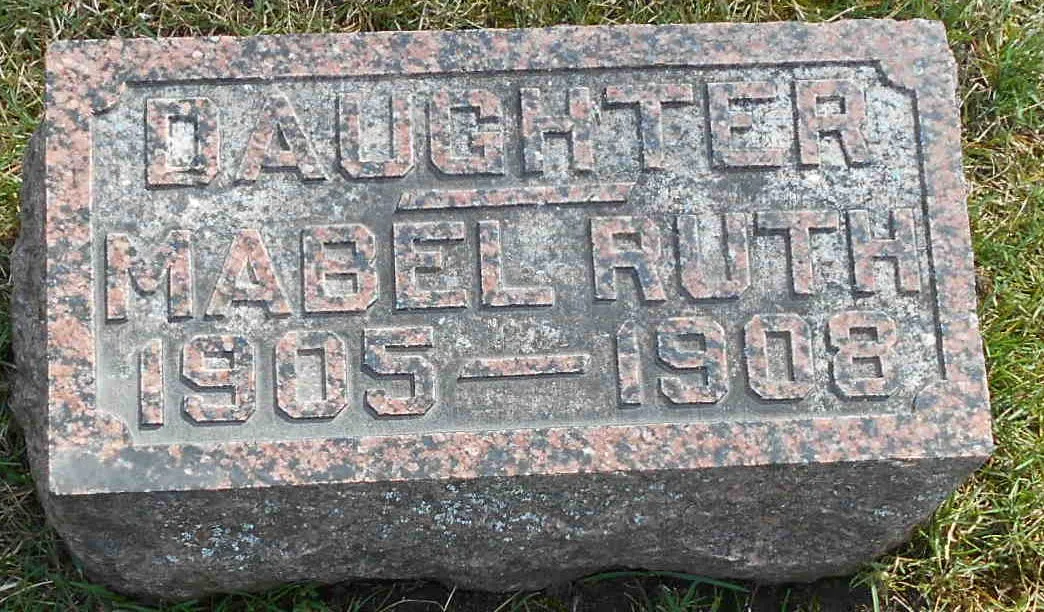 Photo: Mabel Ruth Oster, via images.findagrave.com
The box was organized the way you'd expect: Breads, Soups, Casseroles, Preserves, Desserts. Handwritten dividers in her neat school-teacher print, each one labeled in blue ink that had faded to the color of a vein. I went through them in order, photographing everything, and most of it was what you'd hope to find — her apple cake, her bread-and-butter pickles, a clipping from a 1974 church bulletin with her name printed next to a green bean dish.
The card behind the Desserts divider was not a dessert.
It was written on the same lined index card stock as everything else, in the same blue ink, in her handwriting. I know her handwriting. I have birthday cards going back to when I was four. It was hers. But what it described — I've been trying to find the right way to say this and I don't think there is one — it wasn't food. Or if it was food, it wasn't food for a person.
The ingredients weren't named. They were described. The first drawn from standing water, before light. The white part of something that has not yet opened. What is left on a threshold after three days of rain. There were seven of them, each one stranger than the last, and the preparation instructions were written in the same calm, practical tone as her pie crust recipe — combine gently, do not rush the resting period, the color will change and that is correct.
The last line read: Do not serve before the third night.
I sat with it for a long time. I thought about my grandmother — a Methodist woman, a retired schoolteacher, a person who made her bed every morning and sent birthday cards on time and kept her pantry alphabetized. I thought about all the years I'd sat in her kitchen while she cooked. I thought about whether I'd ever seen this card before and I was certain, completely certain, that I had not.
I brought it to my Aunt Carol's house the following weekend. There were four of my grandmother's daughters there — Carol, Diane, my mother, and Aunt Ruth who had driven up from Knoxville. I put the card on the kitchen table.
The room changed.
I don't know how else to describe it. Nobody screamed. Nobody ran. But four women who had been talking over each other about funeral logistics and who was taking the bedroom furniture went very still in a way that felt coordinated, like they'd rehearsed it. My Aunt Diane picked up her coffee mug and looked out the window. My mother said my name in a tone she hasn't used since I was a teenager.
Aunt Carol turned the card face-down without reading it — I watched her eyes and she didn't read it, she knew not to look — and she said, quietly, where did you find that.
I told her. Behind the Desserts divider.
She nodded like that was the answer she expected and the answer made something worse.
I asked what it was. I asked directly, the way you have to ask when a room is trying to wait you out. None of them answered for a long moment. Then my Aunt Ruth, who is seventy-three and has a bad hip and generally does not have patience for drama, said: It's not for us. It was never for us. Your grandmother kept it because you keep things like that somewhere they won't be lost. She paused. You don't use them. You just keep them safe so they don't end up somewhere worse.
I asked what things like that meant.
Ruth looked at me with an expression I've only seen on very old people — not unkind, but finished, like a door that's been closed so many times the latch has worn smooth. She said: Something she was given. The way her mother was given one, and her mother before her. Then she said, Put it back where you found it, and she picked up her coffee and the conversation moved on and no one in that room would meet my eyes for the rest of the afternoon.
I put it back behind the Desserts divider. The box is on my kitchen counter.
I've thought about what Ruth said — you keep things like that somewhere they won't be lost — and I keep coming back to the part I can't shake loose. She said my grandmother kept it safe so it wouldn't end up somewhere worse.
Not so it wouldn't be used. Not so no one would find it.
Somewhere worse.
I don't know what the card is for. I don't know what you make from standing water and thresholds and something that hasn't opened yet. I don't know who first wrote it out, or how many times it's been copied from one index card to another as the old ones wore through.
I do know that I've had the box for three months now, and I haven't moved it from the counter, and some mornings I come downstairs and the Desserts divider is at the front.
I always put it back. I tell myself I must have left it that way.
The third night of what, I haven't let myself wonder yet.